

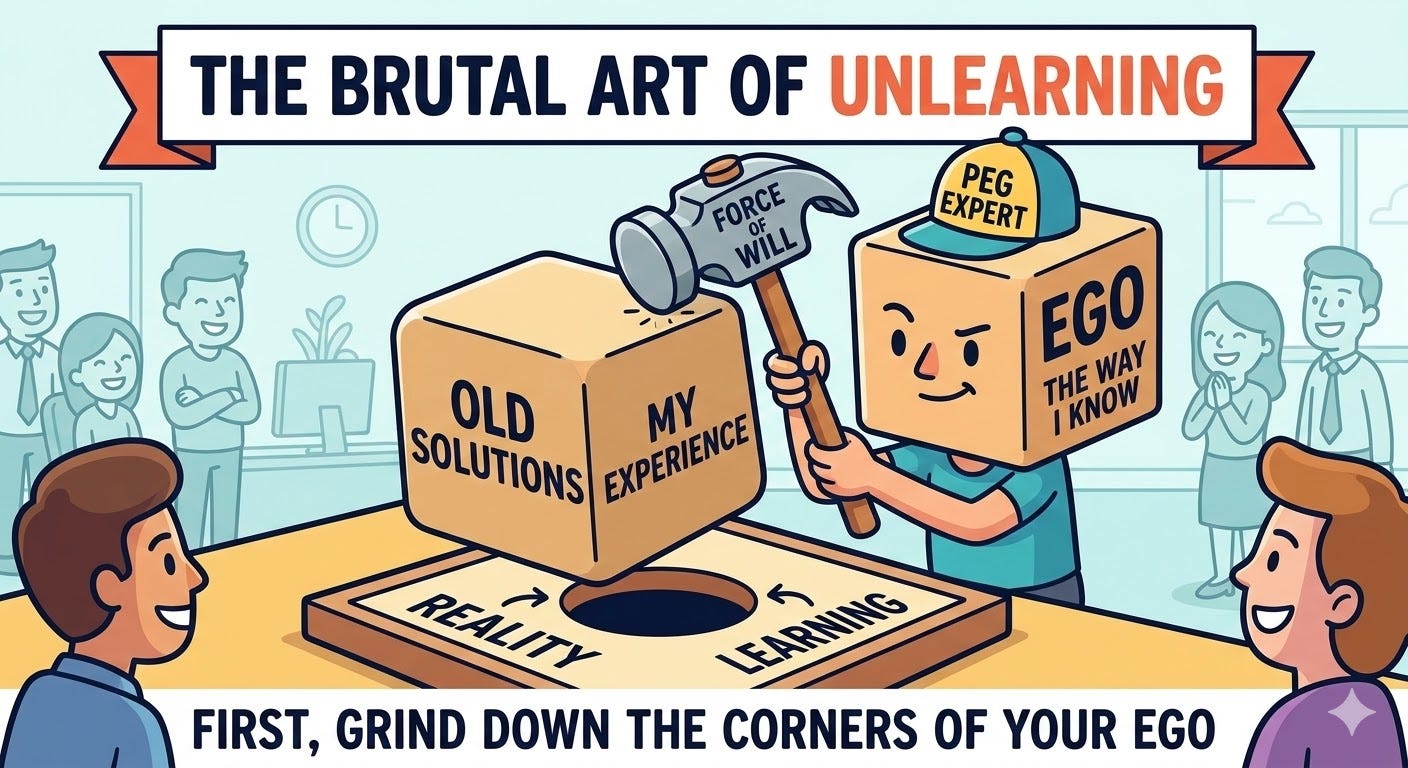
Yes. Unlearning is a science. If someone says that unlearning is an art, tell them to unlearn the “unlearning is an art” first. Unlearning is linked to human behaviour and how our brain works. Whether it is about getting dopamine hits by proving your supremacy over others, or your amygdala’s response as “fight or flight” in a high stakes situation, or your pre-frontal cortex just retrieving your ill formed “quick 2 cents” from shallow memory and not activating neocortex to dive deep into deep archival memory consolidated by your hippocampus, unlearning and learning is deep rooted in the complex functioning of the brain as a result of your actions since birth.
Alright! Enough of showing off my superficial and theoretical understanding of the human brain after reading the book The Brain by well known neuro-scientist David Eagleman. Let’s move to the main topic.
I was recently hunkered down with the final two chapters of The Psychology of Money by Morgan Housel, trying to absorb some financial Zen, when my phone buzzed with a LinkedIn notification. I generally turn off notifications when doing just deep focus activity like reading a physical book but I forgot this time. Okay! No more digressions. The notification was about an article by my friend Pranav Bhasin: “10 Mental Models You Must Dump Before AI Takes Over”.
Between Pranav’s warning about clinging to dying frameworks and Housel’s take on the history of risk, I felt like I’d been double-slapped by reality. Housel quotes B. H. Liddell Hart in the book:
“History cannot be interpreted without the aid of imagination and intuition. The sheer quantity of evidence is so overwhelming that selection is inevitable. Where there is selection, there is art. Those who read history tend to look for what proves them right and confirms their personal opinions. They defend loyalties. They read with a purpose to affirm or to attack. They resist inconvenient truth since everyone wants to be on the side of the angels. Just as we start wars to end all wars.”
Reading that coupled with Pranav’s nudge to dump my mental baggage, it felt like a high-speed collision with my own ego. It reminded me of the countless times in my 24+ year career where I stuck to a failing strategy, not because I was right, but because I was too arrogant to admit I was wrong. I called it “strategic consistency.” In hindsight, I just look like a guy trying to operate a smartphone with a rotary dial.
But here is the brutal truth: hindsight is a liar. We love to look back and think, “I’ve learned my lesson; I’ll do better next time.” No, you won’t. Hindsight gives you the illusion of learning, but every situation, every market condition, and every moment is unique. You never get a second chance to fix that specific mistake because that specific moment is gone forever. Thinking your “experience” guarantees a better result next time is just another ego-driven hallucination. If you haven’t unlearned the garbage that caused the first failure, you’re just waiting for a brand-new way to mess up.
This is exactly why most people are terrible at learning. We don’t actually want to learn; we want to be right about what we already know. But here is the brutal truth: if you want to actually grow, you have to get comfortable with the idea that half the stuff in your head is probably garbage. Before you can learn anything new, you have to unlearn the old, dusty ideas holding you back.
Most people defend their outdated opinions to the death just to maintain a sense of supremacy. They claim to have an “open mind” while actively sabotaging their own growth. It is hypocritical, it is exhausting, and it is the ultimate speed breaker on your career path.
Unlearning is much harder than learning, but without it, your new knowledge is just a coat of paint on a rotting fence.
The “I Don’t Know” Growth Hack: Why the Clueless Win
Let’s look at how the world actually changes. Every time there is a massive paradigm shift in an industry, the people who get crushed are the ones who were “experts” in the old way. The ones who win are the ones who were willing to say three simple words: “I don’t know.”
Think about the shift from physical retail to e-commerce. The experts at massive department stores knew everything about supply chains and retail footprints. They had decades of experience. And that experience was exactly what killed them. They couldn’t unlearn the idea that people need to touch a product before they buy it.
Take someone like Bill Gates or Jeff Bezos in their early days. They weren’t winning because they had thirty years of industry experience. They were winning because they didn’t have the baggage of “how things are done.”
When the world changes, your 20 years of experience often becomes a backpack full of bricks. You’re trying to run a marathon while clinging to trophies from a sport that isn’t being played anymore. Those who win are the ones who can drop the bag.
There is a legendary story about Andy Grove at Intel. In the mid-80s, Intel was getting slaughtered in the memory chip business by Japanese competitors. Memory was their identity; it was everything they knew. Grove sat down with Gordon Moore and asked, “If we got kicked out and the board brought in a new CEO, what do you think he would do?” Moore said, “He would get us out of memory.” Grove’s response? “Why shouldn’t we walk out the door, come back in, and do it ourselves?”
They had to “unlearn” their own history to survive. Most people cannot do that. They would rather go down with the ship than admit they are holding a map of a world that no longer exists. This is the blood sport of ruthless execution, where the strategy of saying no to your own history is the only way to move forward.
“In a world of change, the learners inherit the earth, while the learned find themselves beautifully equipped to deal with a world that no longer exists.” — Eric Hoffer
The Three Horsemen of Intellectual Stagnation
Why is unlearning so much harder than learning? Because your brain has built-in defense mechanisms that keep you stuck. Daniel Kahneman, the Nobel laureate who proved we are all basically irrational toddlers in expensive suits, identified the Illusion of Control. We have a desperate, almost pathetic need to believe the world is predictable.
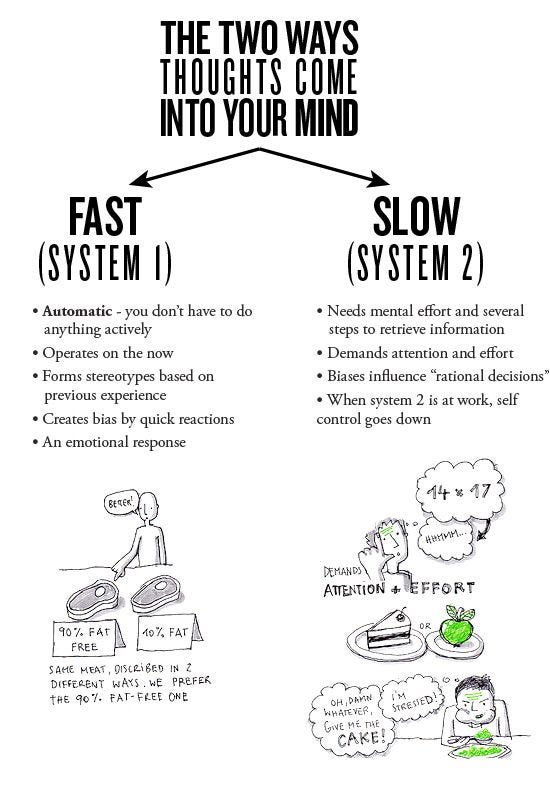
One of his most stinging observations is about the Illusion of Control. Kahneman noted that we have an almost desperate need to believe the world is predictable and that we are the ones steering the ship. When we are confronted with something we don’t understand—like a new technology, a shifting market, or a younger colleague’s superior method—we don’t just say “I don’t get it.” Instead, we refuse to accept our lack of understanding because to admit we don’t understand is to admit we have lost control.
Losing control feels like losing power. For an “expert,” power comes from knowing. If you don’t know, you aren’t powerful. So, you cling to your old mental models like a life raft in a storm, even as that raft is sinking.
Here are the three core principles of why people cannot unlearn:
1. “I Want to Sound Smart” : Confirmation Bias
Kahneman’s work on Confirmation Bias shows we only see what proves us right. We don’t want to solve problems; we want to be admired. We think letting go of old info makes us look weak. We value sounding “knowledgeable” in meetings over actually being effective.
In a B2B setting, this looks like a Product Manager who spent six months building a feature nobody wants. When the data shows zero adoption, instead of unlearning the “killer feature” hypothesis, they double down. They say the marketing was wrong, or the users “need to be educated.” They are cherry-picking the one positive feedback from a cousin to ignore the 10,000 users who closed the tab. It’s a massive blind spot that keeps leaders from seeing the iceberg right in front of them.
2. The IKEA Effect: Loving Your Own Trash
We overvalue things we’ve built ourselves. If you spent five years designing a specific workflow, you will defend it even if it’s clearly broken. This is the IKEA Effect—you love the wobbly table because you put the screws in the wrong holes. You try to retrofit this old, clunky knowledge into new problems, wasting effort and ignoring the fact that the world has moved on.
In corporate life, this is the “Legacy System” champion. They wrote the original COBOL or the spaghetti-code Java monolith in 2008, and they treat any suggestion of a modern microservices architecture as a personal insult. They aren’t defending the tech; they are defending their 15 years of sunk-cost effort. They are emotionally attached to their own inefficiency.
3. The Dunning-Kruger Trap: The Confidence of the Ignorant
The less you know about a new field, the more you think your “general management wisdom” covers it. To learn, you have to be the “dumbest” person in the room for a while. For a “high-pedigree” executive, this is a fate worse than death. So, they close their minds and start lecturing about “fundamentals” while the competition is busy building the future.
The Dunning-Kruger effect creates a “Peak of Mount Stupid” where your confidence is at its highest just before you realize you have no idea what you’re talking about. I’ve seen CEOs lecture AI researchers on “model optimization” because they once read a Wikipedia page on linear regression. They live on that peak forever because the view is nice and they don’t have to admit they can’t see the summit from there.
“Part of the reason I have been a little more successful than most people is I am good at destroying my own best loved ideas.” — Charlie Munger
The Unlearning Protocol: How to Not Be a Dinosaur
1. Admit You’re Clueless (In Public)
Stop “private learning” where you hide in your office googling terms so you can look smart later. Say “I don’t know” in the meeting.
When a junior engineer asks a hard question about why we are using a specific vector database or how the RAG (Retrieval-Augmented Generation) pipeline handles hallucinations, don’t sideline them. Don’t say, “Let’s take that offline” (the universal corporate code for “I have no clue and you’re embarrassing me”).
Practice saying, “You’re right, I’m wrong,” or “I don’t actually know the answer to that, tell me more.” It doesn’t matter if you have 25 years of experience or an Ivy League degree. If you can’t admit you don’t know in front of your team, you aren’t a leader; you’re a fraud holding your own career hostage to satisfy your ego. Develop a habit of listening. Start believing that a junior with a fresh perspective can teach you something better than your dusty “best practices” manual.
2. Get Back to First Principles (Avoid The Trap)
Everything works from first principles—breaking a problem down to its core truths. But most people prefer “cosmetic unlearning.”
Look at how companies implement Agile. Companies implement the buzzwords: small teams, DRIs, “Two-Pizza” squads, PODs. They have the stand-ups and the fancy Jira boards. But the decision-making, tracking, and success metrics are still pure, old-school Waterfall.
They track productivity by hours worked, number of meetings, or lines of code. This is an illusion of velocity. People easily fake these metrics. They “sprint” in circles, producing documents and “alignment” while accomplishing zero actual outcomes. They haven’t unlearned the need for control, so they just renamed their bureaucracy “Scrum.” This is why organizations fail—they measure the wrong things because they’re afraid to stop controlling the wrong things.
“I think it’s important to reason from first principles rather than by analogy... We do this because it’s like something else that was done, or it’s like what other people are doing.” — Elon Musk
3. The Habit of Doing (The “Shut Up” Rule)
Everyone has an opinion. Everyone wants to be a “consultant” or an “advisor.” Everyone can tell you how to do it better. If you are telling everyone how to solve a problem but you have never solved it yourself, sit quiet. Let the people who are actually doing the work solve it.
Maybe you solved a similar problem in 2010. Guess what? The world changed. Your 2010 solution might actually be dangerous today. Your old solution might be detrimental now. If you have never coded, do not advise engineers on algorithms. If you have never done sales, do not tell the sales team how clients react. If you have never traveled, do not give advice on how to handle a flight delay.
Your past solutions are often detrimental because they are built for a world that doesn’t exist anymore. If you haven’t done it yourself, you don’t know it. You just have a memory. Real unlearning happens when you become part of the team and actually get your hands dirty.
Example: If you’ve never traveled, don’t give advice on traveling. If you’ve never built a business model, don’t critique a startup’s unit economics based on a textbook from 1994.
“If you cannot successfully do something, do not think you can tell others how it should be done.” — Ray Dalio
The Tale of the “AI Transformation” Mandate
Forget the jar of old tea; that’s too poetic. Let’s talk about a real-world B2B horror story. I recently watched a “Digital Transformation” leader at a massive enterprise drive an “AI First” initiative. This guy had 30 years of experience in business process outsourcing. To him, “AI” was just a fancy word for the rule engines he used in the 90s.
He issued a mandate: every employee must use AI for 20% of their tasks. He set up a dashboard to track “AI Usage.” How did he define usage? If you clicked “Summarize” in an app, you got a point.
He treated the LLM like it was a giant spreadsheet of if-then-else statements. He couldn’t unlearn the idea of deterministic software. When the engineers tried to explain that LLMs are probabilistic—that they don’t “calculate” but “predict” based on weights—he ignored them. He asked why he couldn’t just “hard-code the correct answer into the AI.”
The engineers were crying in the breakroom. The boss was celebrating “100% AI Adoption” on LinkedIn. Meanwhile, the actual output was 100% AI slop—hallucinated legal contracts and sales emails that addressed the customer as [INSERT_NAME_HERE] variable showing up in the email.
He was driving a Ferrari like it was a tractor because he refused to unlearn how a tractor works. He had an illusion of control over a system he didn’t fundamentally understand. He wasn’t building the future; he was just automating the past with more expensive tools.
Learning is Doing: The Coach vs. The Player
True learning only happens through doing, not through theory. If you cannot build it yourself, you cannot teach others. A coach has always been a player. It does not matter if they were a huge success or a failure, but they had to have been on the field. They had to feel the pressure and make the mistakes.
True learning isn’t reading a PDF; it’s getting your hands dirty. Theory is where egos go to hide. Practice is where they go to die.
Once you’ve cleared the junk out of your head, you can finally learn. But don’t learn from a textbook. Learn by doing. If you want to understand a business model, try to build a small version of it. If you want to understand a technology, try to use it to fix a small problem in your life. Theory is a comfortable lie we tell ourselves so we don’t have to face the messiness of reality.
I am working on this project called CareerPlot. I had 25 years of ideas about how it should work. I had a grand vision. But when I actually started building it, I realized half of my ideas were based on a world that existed ten years ago. I had to throw away my best loved ideas and start from what the users actually needed. I had to unlearn my own expertise to build something that actually worked.
Start by unlearning your own importance. Admit you’re a beginner. Build something, break it, and then try again. That’s the only learning that actually counts. Everything else is just “interpretations” and “loyalty to history”.
Unlearning is harder because it requires you to admit you were wrong. It requires you to lose power and control. But without it, you are just an expert in a world that is already gone.
Don’t be the person who is “beautifully equipped for a world that no longer exists.” Admit you’re a beginner. Admit you’re wrong. Empty your cup. Because if you don’t unlearn the junk, there’s no room for the truth.